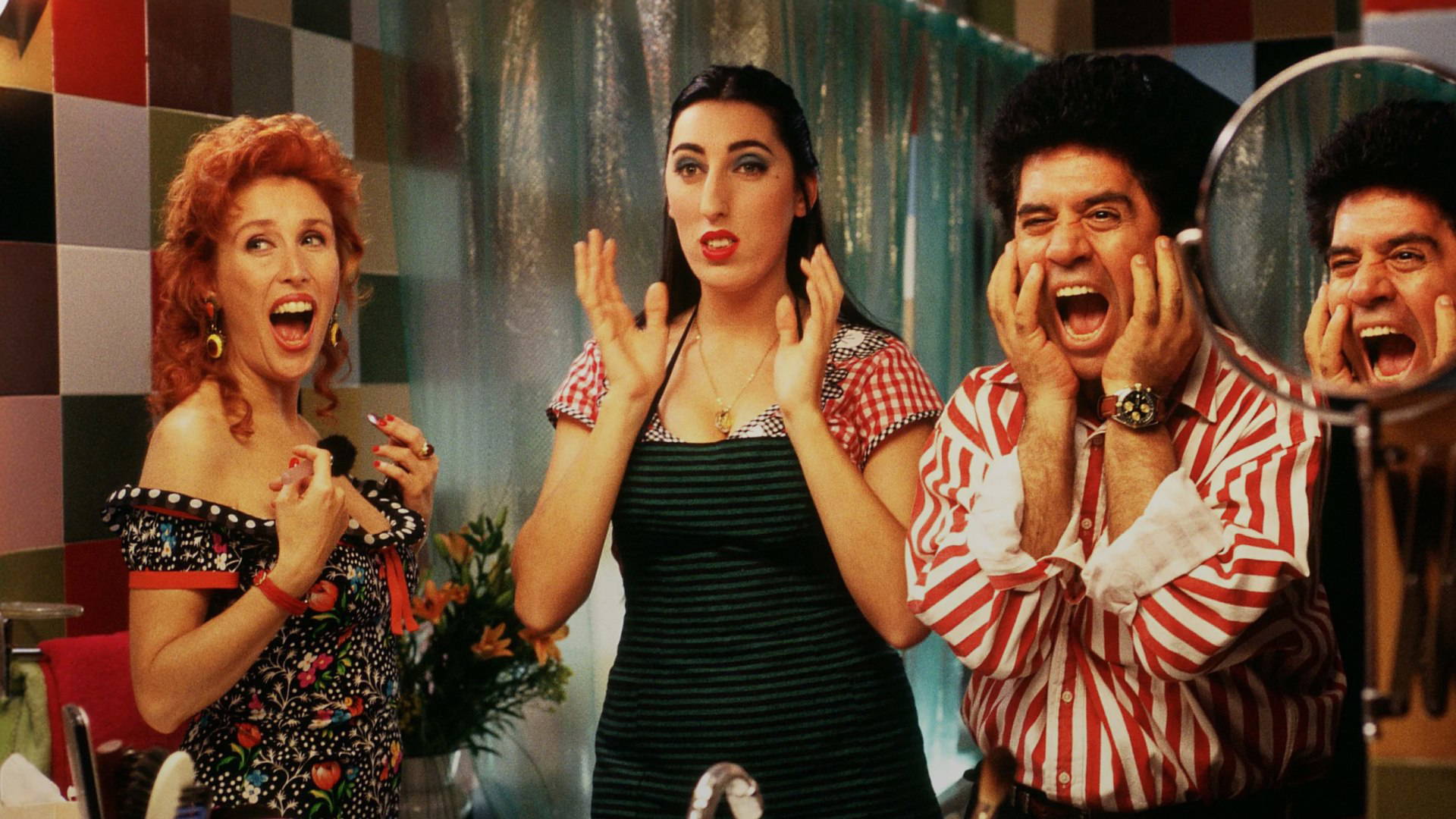
Viva Pedro!
One of the most important European filmmakers of our time, winner of an Oscar and a Golden Lion. Cinobo presents a collection of Pedro Almodóvar films, from his early works that pushed boundaries with their irreverent humor and brought a bold queer sensibility into the mainstream. Daring, rebellious, unapologetically punk cinema.
Titles in this collection
All About my Mother
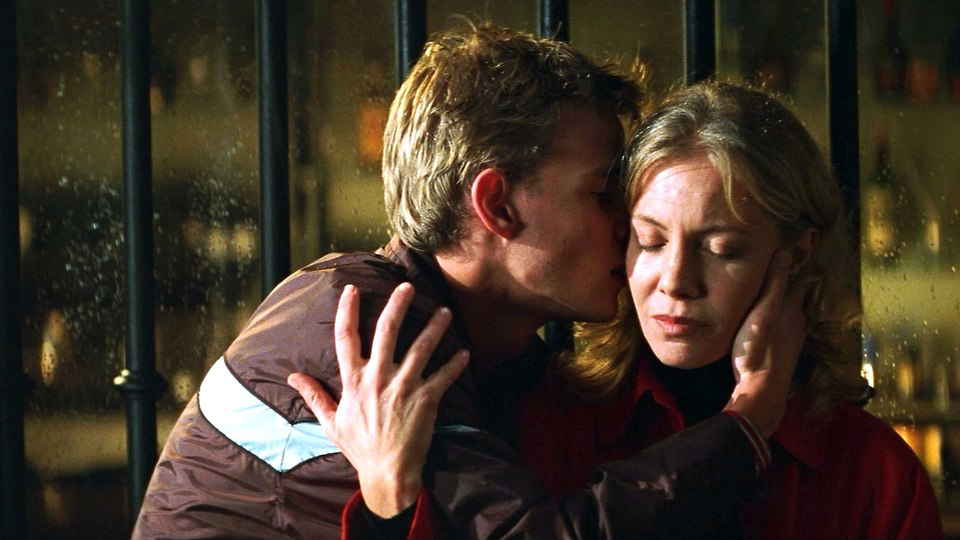
Bright, explosive and tender, Almodóvar’s Oscar winner is dedicated to Bette Davis, Gena Rowlands, Romy Schneider and his own mother. A woman who has lost her son sets out to find the boy’s father, and on the way she finds friends in women who won’t let her fall. — Esteban dies on his seventeenth birthday, struck by a car in Madrid as he runs to get an actress’s autograph. His mother, Manuela, walks away from everything and heads to Barcelona in search of the boy’s father, whom Esteban never met. The man has never heard that he had a son. — Best International Film | Oscars | 2000 Best Director | Cannes Film Festival | 1999 FIPRESCI Prize | San Sebastian Film Festival | 1999 Best European Film | European Film Awards | 2000 Best Director | BAFTA | 2000
Tie Me Up! Tie Me Down!
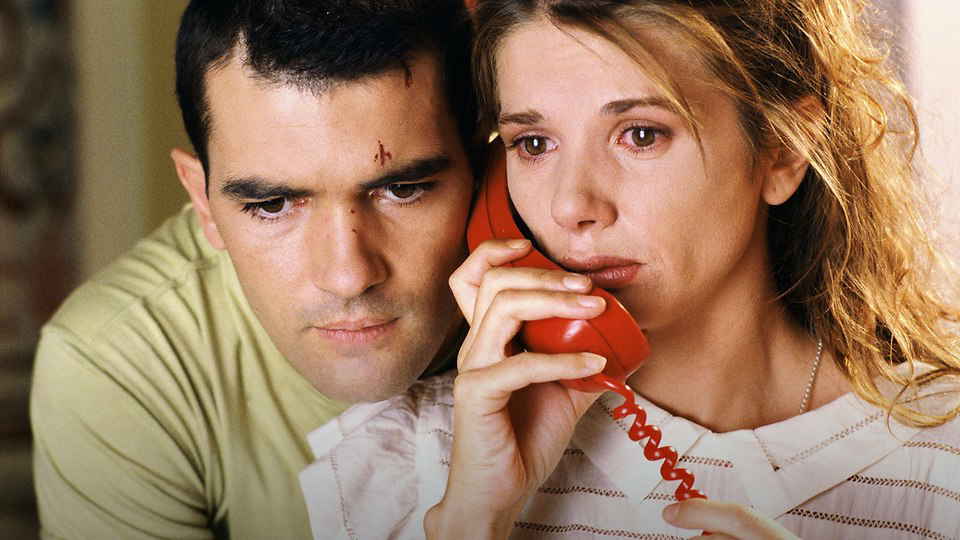
Antonio Banderas ties Victoria Abril to a bed and waits for her to fall in love with him. To Almodóvar this is a black romantic comedy, and the Spanish master made it loud, explosive and every bit as controversial as it sounds. — Ricky walks out of a psychiatric hospital knowing exactly what he wants, which is to marry Marina, a porn actress he once spent a night with, and to have children with her. Marina, unfortunately, doesn’t remember him. So Ricky breaks into her flat and ties her to the bed. — Official Selection | Berlin Film Festival | 1990

Broken Embraces
A blind screenwriter is drawn back to the love that wrecked him and the film he was writing then, in a melodrama-thriller from Pedro Almodóvar at the top of his game. Almodóvar nods to his own “Women on the Verge of a Nervous Breakdown”, and Penélope Cruz plays a kept woman who knows her worth. — A blind screenwriter in present-day Madrid writes under the name Harry Caine and never tells anyone how he lost his sight. Then a stranger turns up with questions about Lena, the actress who starred in his last film, and about the very rich man who paid for that film back then. — Official Selection | Cannes Film Festival | 2009 Nominated for Best Foreign Language Film | Golden Globes | 2010 Nominated for Best Film Not in the English Language | BAFTA Awards | 2010
Live Flesh
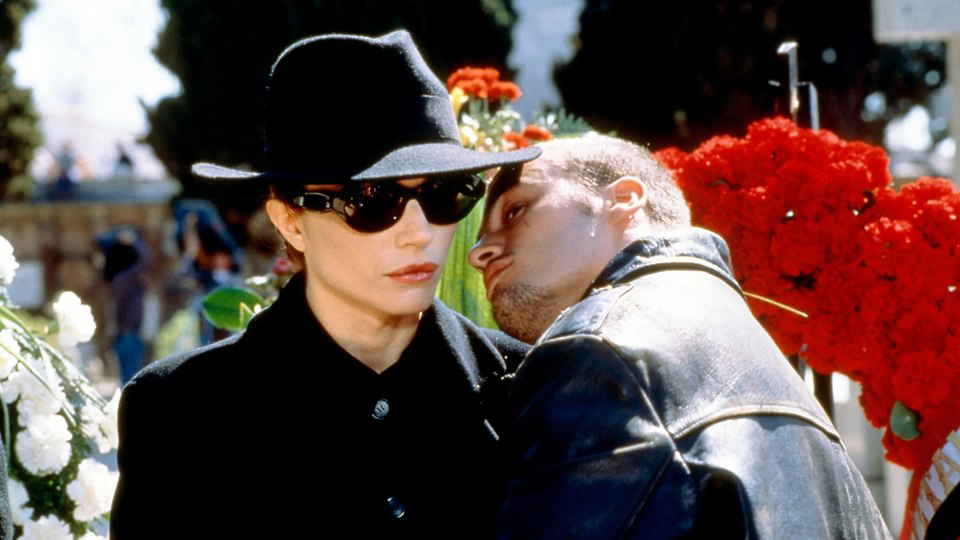
Almodóvar turns darker here, opening in a Madrid under a state of emergency with a woman giving birth on a bus. From that moment chance ties five people together, and two of them are played by a young Penélope Cruz and Javier Bardem. — On a bus in Madrid at Christmas 1970, with the city under a state of emergency, a young prostitute gives birth to Víctor. Twenty years later he goes looking for Elena, a girl he once spent the night with, and he’s in her flat when two policemen walk in. One of them will leave in a wheelchair. — Nominated for Best Film Not in the English Language | BAFTA Awards | 1999 Nominated for Best Foreign Independent Film | British Independent Film Awards | 1998
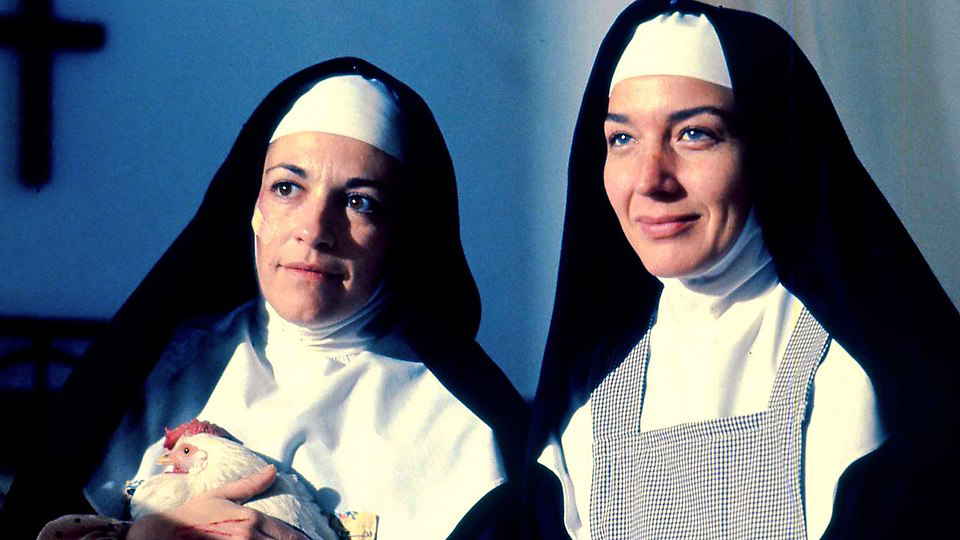
Dark Habits
Almodóvar heads for the convent, where a singer hides out after her lover dies and finds that one sister takes LSD, another writes trashy novels under a pen name and a third keeps a tiger. Every one of them wants somewhere to belong. — A singer needs to vanish after her lover dies of an overdose, so she picks a convent whose order exists to take in fallen women. The trouble is that the sisters have fallen rather low themselves, and the Mother Superior can’t hide how delighted she is to have her.
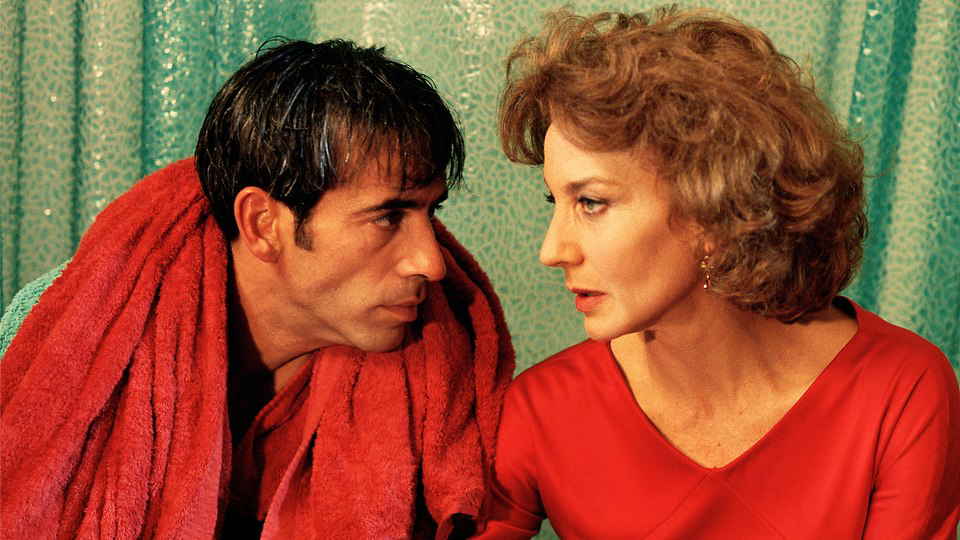
The Flower of My Secret
Marisa Paredes plays a romance writer contracted to turn out five happy endings a year, which gets harder once her husband stops calling from Brussels and the happy endings refuse to come. One scene here became the seed of “All About My Mother”. — Under a pen name, Leo writes the bestselling romances her contract demands, five a year and every one with a happy ending. But her husband has gone to Brussels and stopped calling, and everything she writes now comes out dark and sad, which her publishers won’t go near. — Best Actress (Marisa Paredes) | Karlovy Vary International Film Festival | 1996
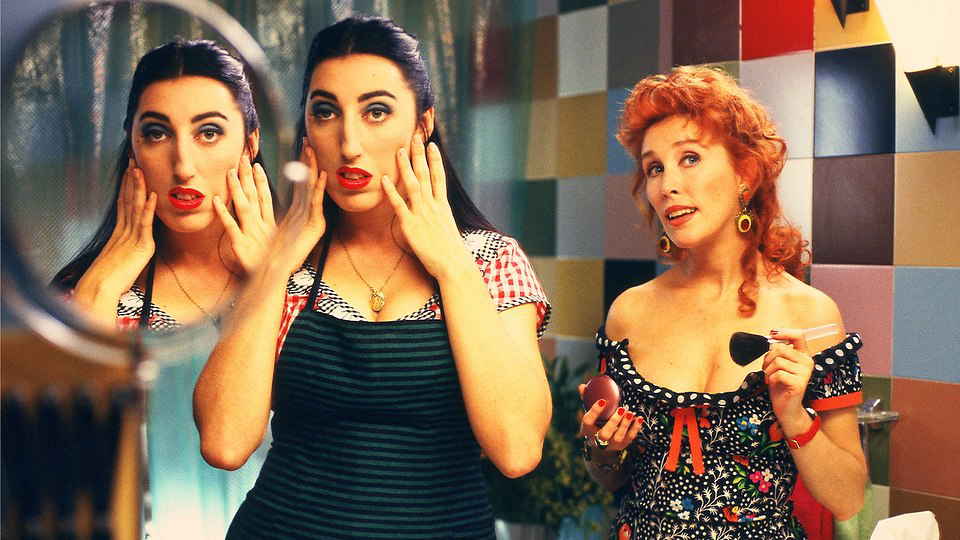
Kika
A TV reporter with a camera strapped to her head and a Jean Paul Gaultier outfit shares the story with a naive make-up artist, a peeping photographer and a killer, and sooner or later everything private ends up on air. It may be Almodóvar’s most extreme film, and he isn’t asking anyone’s approval. — Kika does make-up for a living and believes in every face she works on. Her boyfriend is a photographer who likes to watch people, and his stepfather, an American writer, lives under the same roof. Meanwhile a TV reporter hosts a show about the worst things that can happen to a person, and she needs a new one by tomorrow. — Best Lead Actress (Verónica Forqué) | Goya Awards | 1994
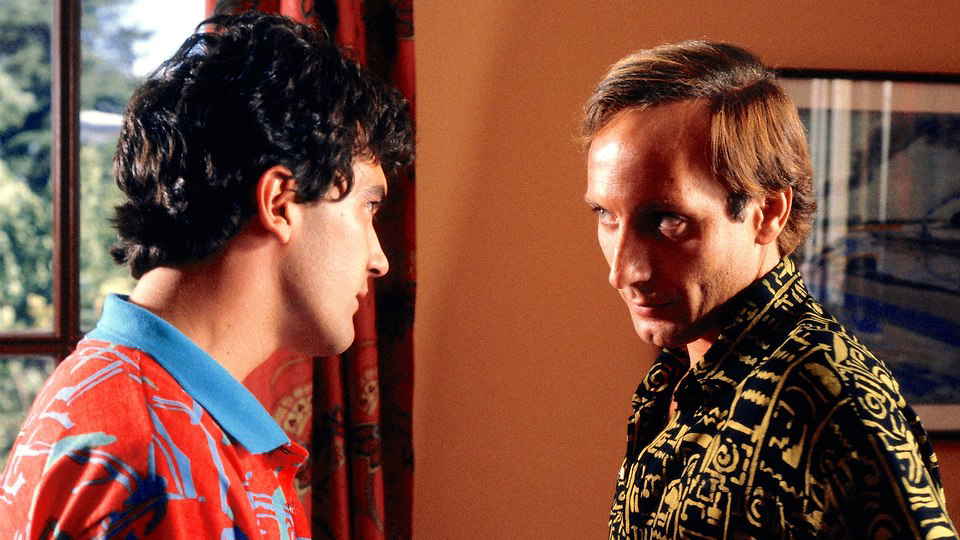
Law of Desire
Almodóvar started his own production company to make sure this film was his alone. A man’s fling with a lover played by Antonio Banderas, who takes it as a promise and tries to get to him through his sister, turns into a dark triangle of violence and obsession that never once hits the brakes. — Pablo, a director, is getting over a lover who has just left town when he starts a brief affair with Antonio, who takes it far more seriously than he does. Pablo’s sister, Tina, is an actress with a past, and Antonio’s obsession is slowly turning dangerous. — Teddy Award for Best Feature Film | Berlin Film Festival | 1987
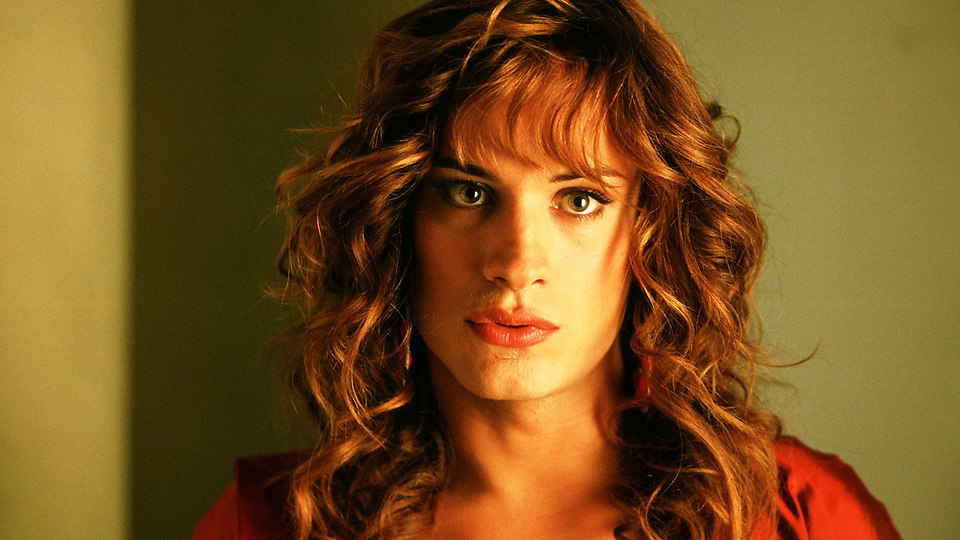
Bad Education
A director opens a script from an old school friend and finds his own childhood in it: the Catholic boarding school, the priest who ran the choir. He should stop reading, but he can’t. Gael García Bernal plays a role modelled on Alain Delon’s Ripley in what may be Almodóvar’s most personal film. — The director Enrique Goded is short of a subject for his next film in 1980 Madrid when a man walks into his office, leaves a script and says he’s the boy Enrique was in love with at school. The pages are about the two of them, their Catholic boarding school and their priest, and Enrique begins to read. — Nominated for Best Film Not in the English Language | BAFTA Awards | 2005 Nominated for Best European Director | European Film Awards | 2004 Nominated for Best European Screenwriter | European Film Awards | 2004
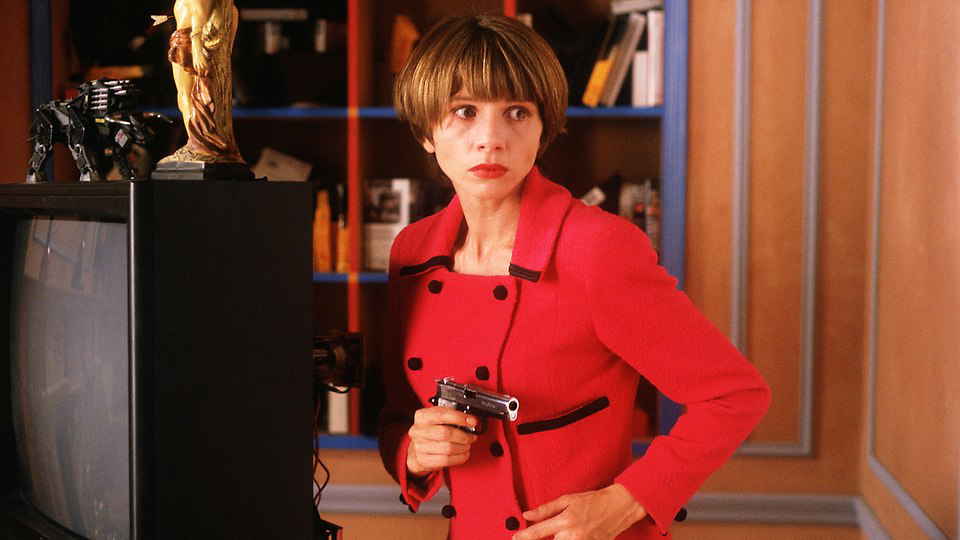
High Heels
A mother and daughter are pushed to the limit, to music by Ryuichi Sakamoto, when the only man they both loved is killed and the trial becomes the first place they’re ever honest with each other. Almodóvar turns the courtroom into a confessional. — Becky left her daughter in Madrid fifteen years ago to sing abroad, and now she’s coming back to a Rebeca who has grown up and, in the meantime, married one of her mother’s old lovers. When he is killed, the police have exactly two suspects. — Nominated for Best Foreign Language Film | Golden Globes | 1992
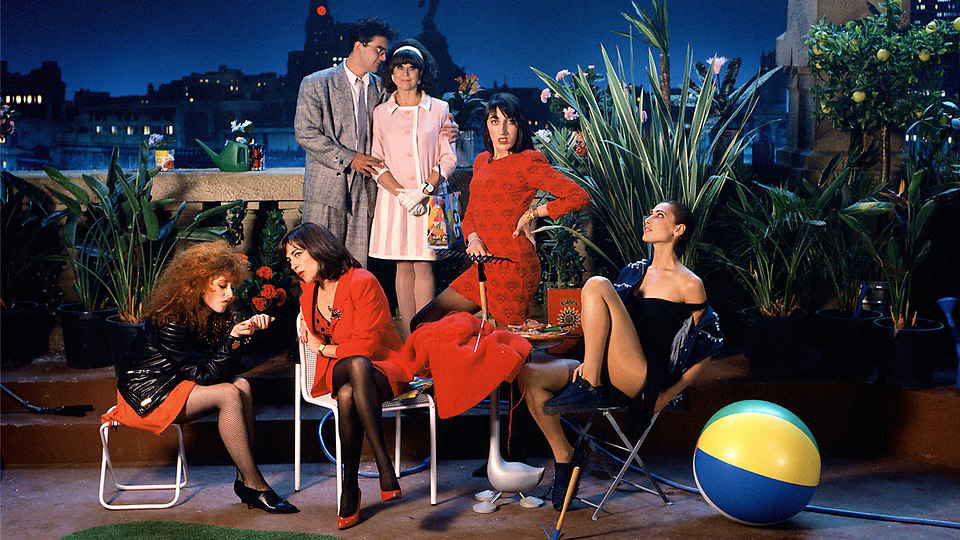
Women on the Verge of a Nervous Breakdown
Pedro Almodóvar’s breakthrough to international fame earned an Oscar nomination and five Goya awards. Carmen Maura and Antonio Banderas star in a madcap story about a woman desperate to get hold of her ex, who keeps running into his ex-wife and his new lover along the way. — Pepa and Iván have been together for a few years and both dub films in Madrid, until he leaves a message on her answering machine asking her to pack up his things. Pepa wants to find him and ask why, but he won’t take her calls, and instead her flat starts filling up with people from his life. She has made a jug of gazpacho, because Iván loves it, and stirred sleeping pills into the soup. — Nominated for Best Foreign Language Film | Oscars | 1989 Best Actress (Carmen Maura) | Venice Film Festival | 1988 Best Screenplay | Venice Film Festival | 1988 People's Choice Award | Toronto International Film Festival | 1988 Nominated for Best Non-English Language Film | Golden Globes | 1989 Best Film | Goya Awards | 1989 Best Actress (Carmen Maura) | Goya Awards | 1989 Best Supporting Actress (María Barranco) | Goya Awards | 1989 Best Actress (Carmen Maura) | European Film Awards | 1988
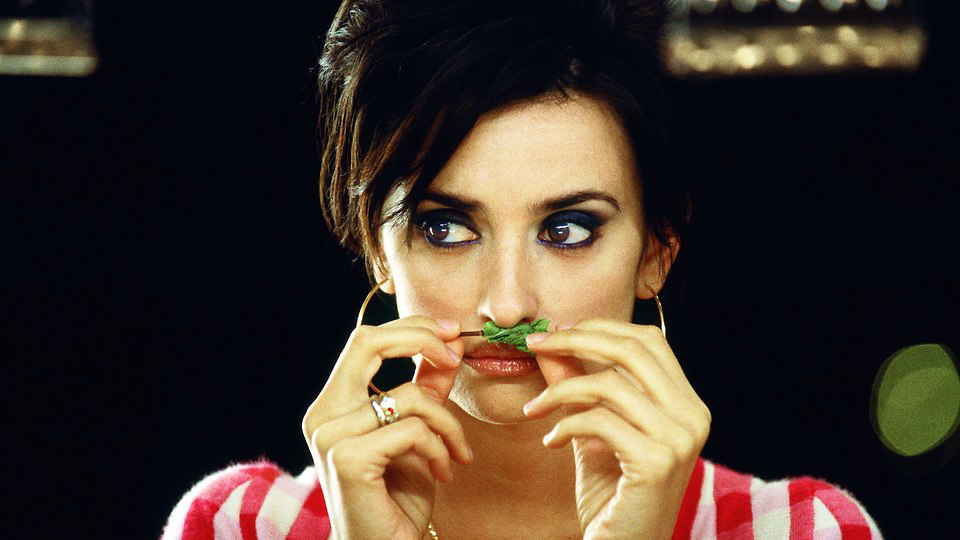
Volver
Pedro Almodóvar modelled the women in his tribute to female solidarity on the women of his own family, and Cannes got round the problem of choosing between six actresses by giving them one award to share. With ghosts, La Mancha and tango, it’s a film about death that sends you out smiling. — In a cemetery in La Mancha, village women are scrubbing their family graves. Raimunda, who works two jobs in Madrid, has come down with her sister Sole and her teenage daughter Paula to look in on their elderly aunt. Soon the neighbours start saying they’ve seen her mother, but her mother has been dead for three years. — Nominated for Best Actress in a Leading Role (Penélope Cruz) | Oscars | 2007 Best Actress (Penélope Cruz) | Cannes Film Festival | 2006 Best Screenplay | Cannes Film Festival | 2006 Best European Film | Golden Globes | 2006 Best Distributor | Golden Globes | 2006 Best Film | Goya Awards | 2007 Best Director | Goya Awards | 2007 Best Actress (Penélope Cruz) | Goya Awards | 2007 Best Supporting Actress (Carmen Maura) | Goya Awards | 2007 Best European Actress (Penélope Cruz) | European Film Awards | 2006 People's Choice Award | European Film Awards | 2006
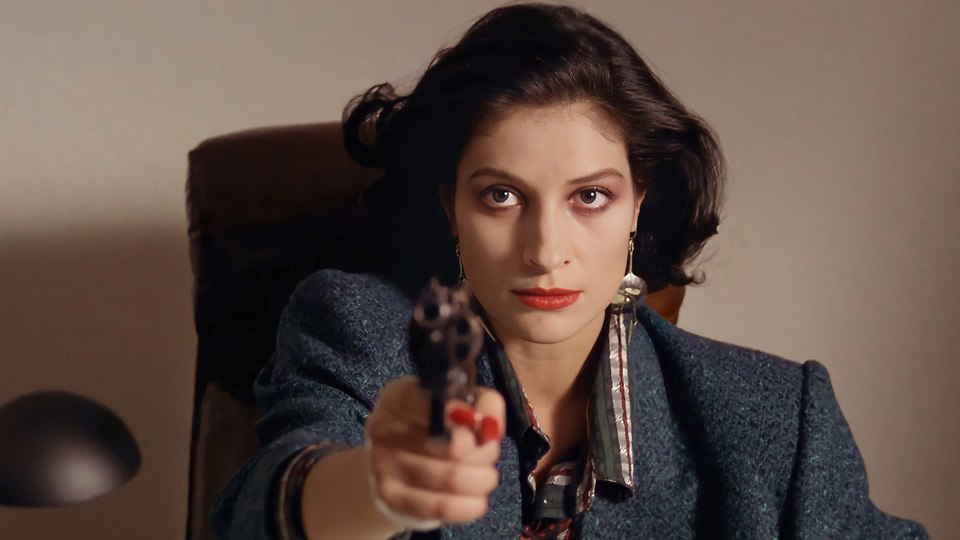
Matador
Pedro Almodóvar’s breakthrough film is about a retired matador aroused by death, who meets a woman with the same desire and a habit of killing her lovers with a hairpin. Antonio Banderas is lost somewhere between them, in a thriller as saturated with colour as a bullfight. — Diego used to fight bulls and now runs a school for boys who want to become matadors. One of them is Ángel, pious, timid and under his mother’s thumb, who does something shameful to prove to himself that he’s a man. Then he walks into a police station and confesses to a string of murders. The murders are real, but he didn’t commit them. — Nominated for Best Supporting Actor (Antonio Banderas) | Goya Awards | 1987 Nominated for Best Restored Film | Venice Film Festival | 2025
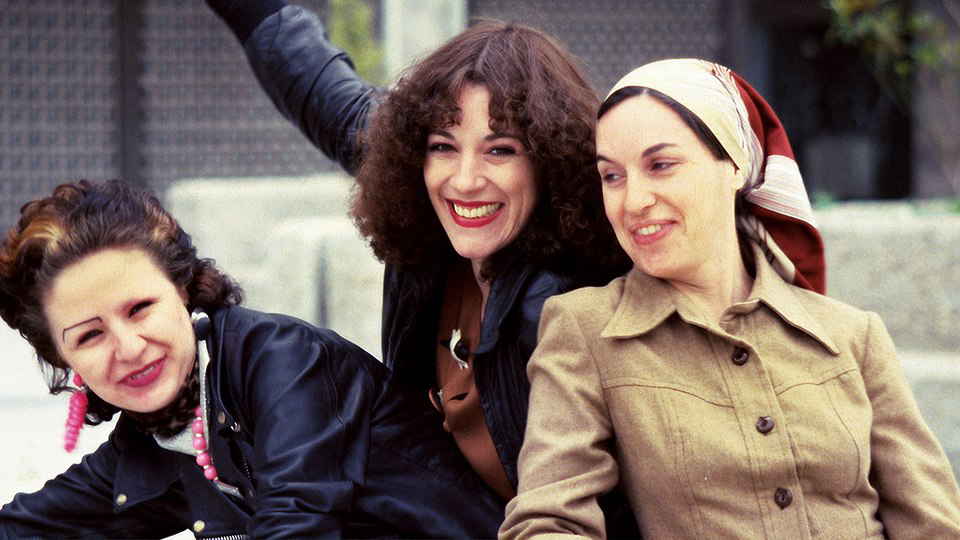
Pepi, Luci, Bom and Other Girls Like Mom
Pedro Almodóvar shot his debut guerrilla-style, as perverse and anarchic as La Movida Madrileña, the counterculture that exploded after the fall of Francoism and took the film as its manifesto. Three girls throw themselves into Madrid’s art underground, and the result is brazen, imperfect cinema. — In late-1970s Madrid, Pepi is growing marijuana on her balcony when the policeman across the street spots the plants from his window. He demands a favour for keeping quiet, then rapes her. Pepi wants revenge and plans to get it through his wife, Luci, inviting her round for knitting lessons and introducing her to Bom, a teenage punk singer. Luci learns faster than Pepi bargained for.
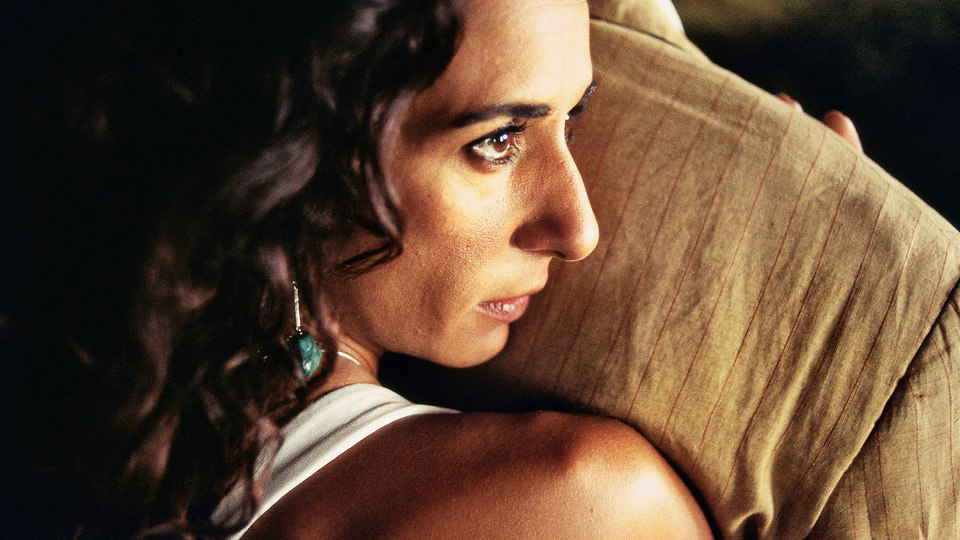
Talk to Her
Almodóvar won an Oscar for the screenplay of this intriguing, melancholy love story. Every day a male nurse tells a woman in a coma what’s been happening in the city, the films he’s seen and what he did after work, while in the next bed lies another woman whose lover can’t get a word out. — For years Benigno, a nurse, has watched Alicia, a young ballet student, from his window. When she’s hit by a car she ends up in his care, and he washes her hair, tells her about films and talks to her endlessly. In the same clinic lies Lydia, a bullfighter badly hurt by a bull, but her lover Marco can’t find a single word to say to her. Benigno can’t understand it. — Best Original Screenplay | Oscars | 2003 Nominated for Best Director | Oscars | 2003 Best Non-English Language Film | Golden Globes | 2003 Nominated for Best European Film | Golden Globes | 2002 People's Choice Award | European Film Awards | 2002 Best European Film | European Film Awards | 2002 Best European Director | European Film Awards | 2002 Best European Screenwriter | European Film Awards | 2002
Get free cinema tickets
Our website uses Cookies
We use cookies to offer you the best possible experience on our site.
- Necessary cookies
- Analytics cookies
- Advertisement cookies